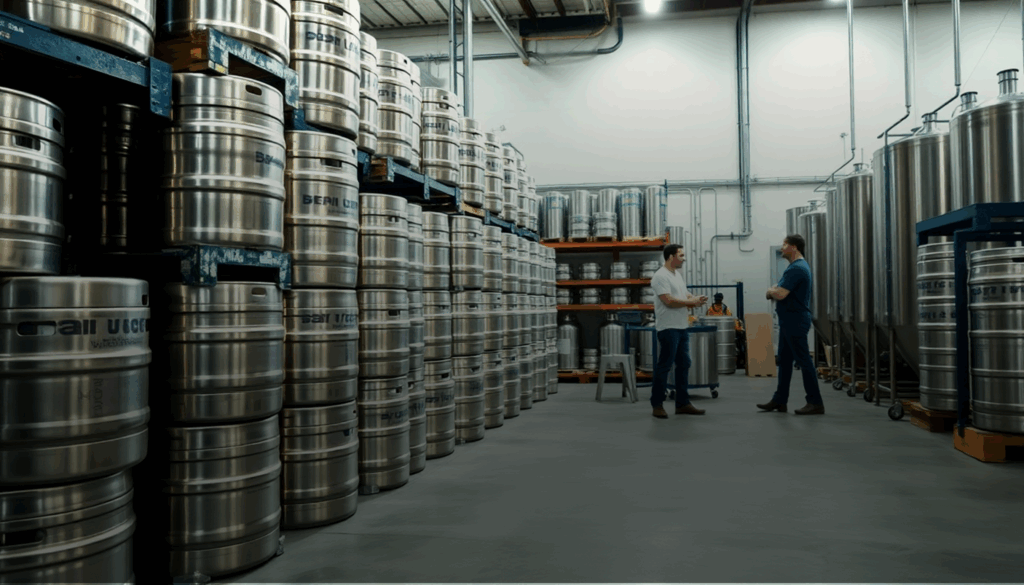
Keg distribution is not without its challenges, but here Courtney Fromm, National Manager at Kegshare, argues that a collaborative, community-driven approach could provide the solutions we desperately need.
In today’s craft beer landscape, many breweries are grappling with a series of craft keg distribution headaches that can feel insurmountable.
Slow keg returns and infrequent pickups from licensees; rising costs associated with storage and logistics; kegs left all over—whether self-distributing or working with third-party services—and a frustrating lack of visibility into the entire process.
These issues not only impact operational efficiency but can also strain relationships within our brewing community. However, a collaborative, community-driven approach could provide the solutions we desperately need.
Let’s first address the elephant in the (cold) room: keg storage and logistics expenses.
Licensees might hold onto kegs longer than expected, leading to inventory shortages for breweries.
Coupled with high storage costs and logistics expenses, many breweries are feeling the pinch. It’s a classic case of too many kegs in the wrong places, and the cost for storing those kegs can be a significant drain on resources.
Moreover, turnover rates are soaring. Whether you’re working with your own distribution team or relying on third-party providers.
This inconsistency can leave gaps in communication and accountability, further complicating the process. And let’s not forget about visibility. Tracking where kegs are in the distribution cycle can feel like looking for a needle in a haystack, leaving breweries in the dark about their own inventory.
The power of community solutions
But what if we approached these challenges differently? Instead of viewing each other as competitors, we could work together as a community. A shared pooled model for keg distribution could revolutionize the way we handle kegs. By implementing a keg ID system and a shared dashboard, we can create a more streamlined process that benefits everyone involved.
1. More hands make light work
Imagine a scenario where multiple companies come together to manage keg pickups. The more that participate, the quicker we can get kegs back into circulation. Faster returns mean fewer kegs are needed to service the same number of taps, ultimately reducing the burden on each individual brewery.
2. Lower storage costs
With a pooled system, storage becomes a community effort. Instead of each brewery bearing the brunt of storage fees, we can share resources and sometimes eliminate storage costs altogether. This not only frees up capital but also ensures that kegs are kept in optimal conditions while waiting for their next journey.
3. Streamlined logistics
By combining logistics across multiple breweries, we can negotiate lower rates and create a more efficient delivery network. Imagine a shared delivery system that maximizes vehicle capacity and minimizes the number of trips needed. This not only reduces fuel costs but also lessens our environmental impact.
4. Easy access to local kegs
When we centralize keg management within our community, accessing kegs becomes a breeze. Breweries can tap the same web’s available nearby, leading to smoother collaborations and making it easier for bars and restaurants to get the products they need when they need them.
5. Support through challenges
In a pooled distribution model, when one partner faces an issue—be it a staffing shortage or a logistical hiccup—there are plenty of other community members ready to step in and help. This support network means that we can overcome challenges collectively, ensuring that no brewery has to bear the weight alone.
6. Enhanced visibility
A keg ID system paired with a community dashboard can provide real-time updates on the status of kegs. Breweries can track when the keg left storage, when it has been picked up, and when it is returned to storage. This transparency is crucial for maintaining accurate inventory and managing production schedules effectively.
Brewing a better future together
The craft beer industry thrives on community and collaboration. By working together to solve keg distribution challenges, we can not only improve our operations but also strengthen our relationships with one another.
Embracing a shared pooled model is more than just a logistical strategy; it’s a way to reinforce the bonds that make our craft beer community so vibrant. Let’s raise a glass to a future where we all benefit from working together—cheers to community-driven solutions!