Breweries have proven that they can be the beating heart of communities across the globe. Here, the award-winning Blake Priddle shines the spotlight on communities in Canada that could benefit from having a microbrewery.
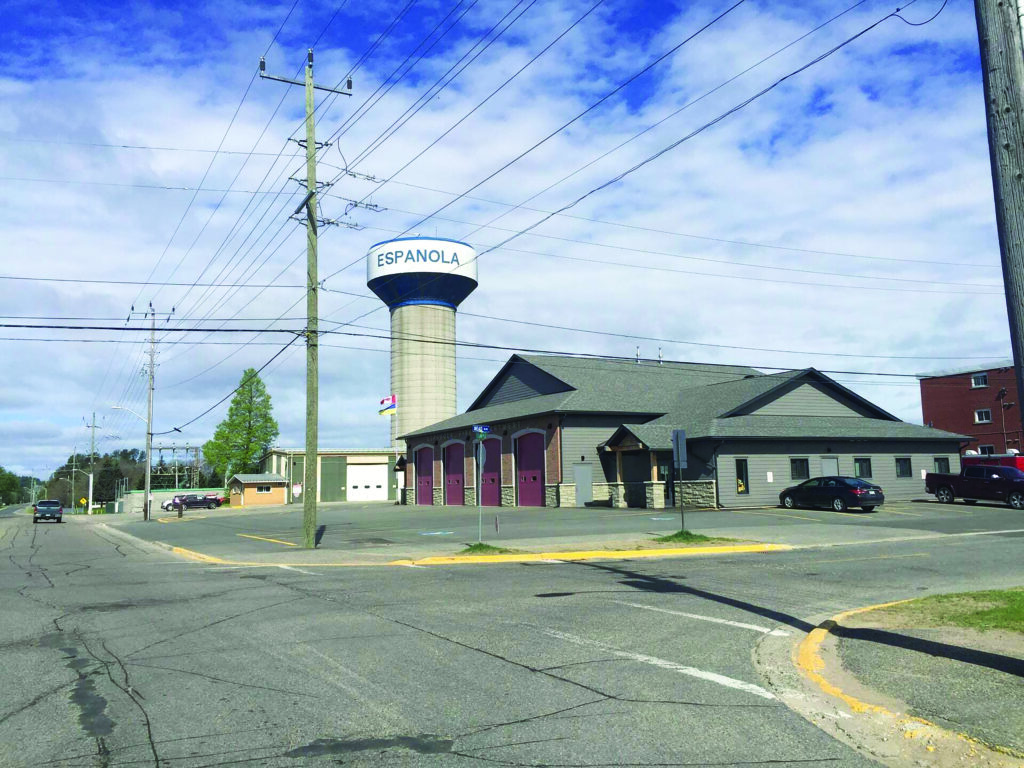
I grew up in a small town in Northern Ontario called Espanola. Not many people know where it is. It’s a small town located between Sudbury and Sault Ste. Marie. For years, the community was a famous pulp and paper town, but the mill became outdated.
It was upsetting to hear that my hometown’s main source of employment – a place where my father was once in charge of safety – would be no more. Around 400 employees were laid off.
That’s when I started brainstorming ideas on how Espanola could rebuild and create new jobs.
The first idea that came to mind was: a microbrewery. Lots of communities have microbreweries that have created jobs and given visitors and residents alike the opportunity to take in a unique beer-drinking experience.
Before I explain exactly why I think Espanola would be a great place to open a brewery, here are some fun facts about this little town, as there is more to the town than the old paper industry. It is also considered to be the birthplace of the game ringette.
The game was co-invented by a former Espanola coach and recreation director, “Red” McCarthy, who also oversaw the first-ever ringette game played in the community in the early 1960s. It is also the childhood home of NHL enforcer Al Secord, who spent most of his career with the Chicago Blackhawks.
When I lived in Espanola, I found that drinking beer and sports is still a very common thing to do at social events such as community suppers and the curling club. Because Espanola is a very community-inclined place, I know that they would support local businesses like microbreweries and not hesitate to wet their whistles with some locally-made beer.
The Split Rail Brewing Company in Gore Bay and the Manitoulin Brewing Company on Manitoulin Island have been successful businesses, and their beers are quite popular in the Espanola area. That is why I think Espanola would be a great place to support a craft brewery owner’s wish to set up shop.
I did reach out to Susan Snelling, a consultant who worked with the Split Rail Brewing Company, and she informed me that the brewery got a whole ton of support when it needed to crowdfund the expansion, highlighting the fact that community support really can go a long way towards supporting a business.
Selling and ways to make it easier to people who want to open a brewery in a successful way, I found that there is a website that stands out from other beers on the market; that way, people will come back for more.
Northern Ontario cities like Sault Ste. Marie and Sudbury also have successful breweries. Keep in mind that independent microbrewers will not create hundreds of jobs, but it will certainly give community members hope that there is potential employment. There are quite a few restaurants in the Espanola area, and since it is a close-knit community, I could easily picture these restaurants serving locally-made beer.
The Pinewood Motor Inn dining room, for example, already serves Split Rail Brewing Company Beer along with other brands and restaurants on Manitoulin Island and Sudbury. Espanola does get a lot of visitors during the summer months, people who drive through the town on their way to the island and snowmobilers who ride through the trails in the winter. Tourists and visitors love trying beers that are unique to certain regions. I should take this time to remind snowmobilers and drivers not to drink and drive.
As part of my research, I went to a Facebook group called “What’s Happening Espanola,” and I asked the group members if Espanola had a microbrewery, what it should be called and if they had any ideas for beer names. Well, I got all kinds of ideas showing that there is real interest in having a microbrewery.
Some of the ideas for the breweries’ names that I liked included Boogie Mountain Brewery (Boogie Mountain is the name of the local ski hill), Paper Town Brewery, and Old Mill Town Brewery. The beer names were creative, too: Spanish River Lager, Ringette Red Ale, Laloche Foothills Lager, and my personal favourite, Stinktown Ale, a reference to the unpleasant odour where the mill once stood.
The names I came up with are Far-away Lager, named after the road where my childhood home was. Secord Stout, named after Al Secord and Ehrhardt Ale, named after Caroline Ehrhardt, one of Canada’s best triple jumpers that once called Espanola home.
The last time I looked in the real estate listings for the Espanola area, one could find small buildings for sale (often less than $100,000) and in one case, one place was a warehouse at the edge of town that could be turned into a brewery easily.
If someone wants to get started with a low budget, there are all kinds of rural properties where microbreweries could be opened from scratch or, if you ask around, you might find someone who might rent out a barn or a shed for you to brew your beer.
You might even find an affordable location in one of the surrounding communities like Massey, Birch Island, Webbwood, or Nairn Centre.
There are a number of business success stories from Espanola, like Espanola Coffee Roasters and Farquhar’s Dairy, proving that Espanola is more than just a pulp and paper town. Suppose this article inspired you to start a brewery in this awesome community.
You can learn more about it by visiting the municipal website espanola.ca. While you’re there, be sure to check out the economic development section, where you will find hiring resources for small businesses.
If you know of a community that doesn’t have a microbrewery and you think it has the potential to support one, don’t hesitate to let me know.